
Введение
Solvent recovery is an essential process in modern commercial laundry operations. During dry‑cleaning and garment care, large volumes of organic solvents—such as perchloroethylene (PERC) or hydrocarbon‑based cleaning agents—are used repeatedly. Over time, these solvents become contaminated with oils, dirt, dyes, and breakdown products. Effective purification and recovery are critical for reducing operating costs, extending solvent life, and ensuring a clean, safe working environment.
Activated carbon plays a key role in this process. Among the different types of activated carbon available, wood‑based activated carbon и low‑ash coal‑based granular carbon are widely used due to their strong adsorption performance, stability, and ability to capture volatile organic compounds (VOCs) in solvent vapor streams.
Why Solvent Recovery Is Essential in Laundry Operations
In professional laundry and dry‑cleaning facilities, solvents are a significant cost factor. Proper recovery not only reduces waste but also keeps equipment running efficiently. Without purification, used solvents may contain:
• Fabric dyes and pigments
• Oils and grease
• Detergent residues
• Odor‑causing organic compounds
• Small particulate impurities
These contaminants can lower cleaning performance, increase machine wear, and create unpleasant odors. Activated carbon provides an efficient method for removing these impurities and restoring solvent clarity and performance.
Which Type of Activated Carbon Work Well for Solvent Recovery
Wood‑based activated carbon is known for its large internal pore structure, especially rich in mesopores. This makes it ideal for adsorbing medium‑to‑large organic molecules commonly found in used laundry solvents. In addition, wood carbon is lightweight, fast‑acting, and capable of removing color and odor effectively.
For vapor‑phase recovery systems, however, many laundry operators also choose low‑ash coal‑based granular carbon, which offers excellent mechanical strength and long service life under repeated adsorption–desorption cycles. This ensures stable performance even in demanding industrial environments.
Activated Carbon Specifications for Laundry Solvent Recovery
The following activated carbon specifications are commonly used in dry‑cleaning and laundry solvent purification systems:
| Параметр | Спецификация |
|---|---|
| Тип | Coal‑based granular activated carbon |
| Mesh Size | 8×30 mesh or 8×40 mesh |
| Йодное число | 1050 mg/g (typical) |
| Содержание золы | Low ash (improves purity and reduces residue) |
| Твердость | High mechanical strength for long service life |
| Влажность | ≤ 5% |
| Приложение | Solvent vapor adsorption, solvent purification, VOC control |
How Activated Carbon Works Solvent Recovery Systems
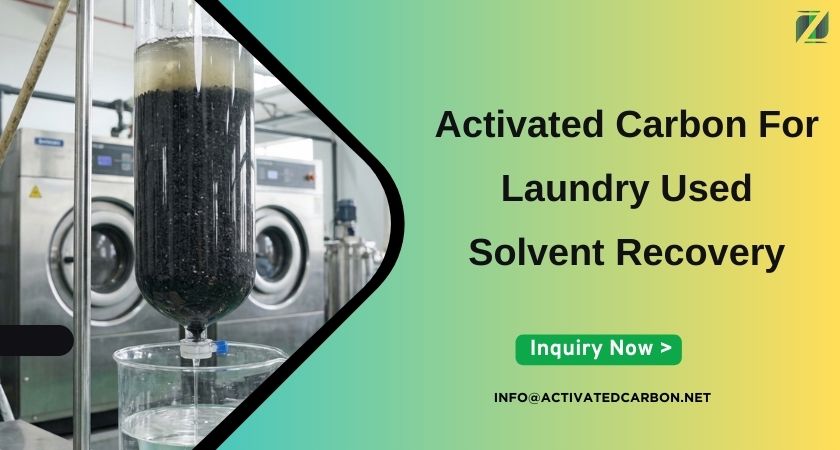
In a typical laundry solvent recovery system, activated carbon performs several important functions. As used solvent vapor or liquid flows through the carbon bed, impurities are trapped inside the porous structure of the carbon. This includes dyes, oils, odors, and volatile organic residues. Clean solvent exits the system ready for reuse, while the captured impurities remain in the carbon.
Wood‑based carbon provides excellent rapid adsorption, while coal‑based granular carbon ensures long‑term durability, making them a highly effective combination for demanding recovery applications.
Заключение
Solvent recovery is a vital part of modern laundry operations, and activated carbon is one of the most effective materials for restoring used solvents to high quality. Wood‑based activated carbon offers excellent adsorption for color and organic impurities, while low‑ash coal‑based granular carbon (8×30 or 8×40 mesh, iodine 1050 mg/g) provides outstanding mechanical strength and long‑term performance. Together, they form a robust and efficient solution for laundries seeking to improve solvent purity, reduce costs, and maintain high cleaning standards.