 Skip to content
Введение
Процессы производства резины - особенно экструзия, нагрев и гранулирование - приводят к образованию сложных органических выхлопных газов. При нагревании и плавлении резиновые материалы выделяют белый дым, сильные запахи и низкая концентрация летучих органических соединений которые при отсутствии должного контроля могут легко рассеиваться в окружающей среде. Чтобы соответствовать нормам выбросов и улучшить качество воздуха на рабочих местах, многие резиновые заводы сегодня используют системы очистки, сочетающие в себе сбор газа, очистка от водяных брызг и адсорбция активированным углем.
В этой статье объясняется, как работает активированный уголь в очистке выхлопных газов на резиновых заводах и почему он широко используется для очистки низкоконцентрированных органических газов.
Как образуются выхлопные газы на резиновых заводах
Во время производства резиновых гранул или резиновых изделий на нескольких этапах выделяются органические пары:
- Нагрев и плавление резиновых материалов
- Процессы экструзии и гранулирования
- Этапы охлаждения и формования
- Добавки и модификаторы, улетучивающиеся при высоких температурах
В результате этих процессов образуются:
- Белый дым или “резиновые испарения”
- Сильные запахи резины
- ЛОС, такие как производные бензола и органические кислоты
- Мелкодисперсные частицы
Поскольку эти загрязнители легкие, пахучие и подвижные, их необходимо улавливать и эффективно обрабатывать, прежде чем выбрасывать в атмосферу.
Стандартный технологический процесс на резиновых заводах
Типичная система очистки выхлопных газов включает в себя следующие этапы:
Коллекторный колпак (улавливание газа): Улавливает белый дым и запах резины непосредственно у источника выброса.
Система трубопроводов (ответвление + главный воздуховод): Передает выхлопные газы в очистное оборудование.
Скребок для распыления воды: Удаляет пыль, мелкие частицы и водорастворимые компоненты.
Циклонная смесительная распылительная башня: Усиливает контакт газа с жидкостью, улучшая удаление запахов и твердых частиц.
Вентилятор с принудительной тягой: Обеспечивает стабильный поток воздуха и отрицательное давление.
Адсорбционная установка с активированным углем: Адсорбирует летучие органические соединения и молекулы запаха на заключительном этапе полировки.
Активированный уголь является основным компонентом, отвечающим за удаление оставшихся органических газов, которые не могут быть уловлены только промывкой.
Тип активированного угля для резиновых выхлопов
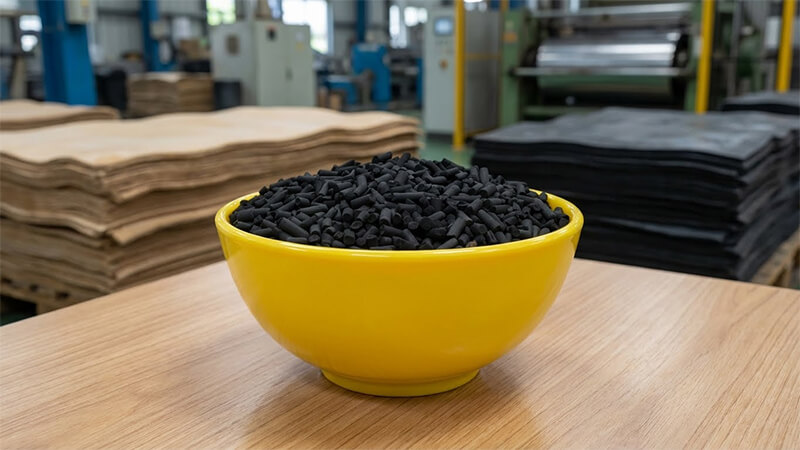
Для эффективной очистки таких газовых потоков большинство производителей резины используют гранулированный активированный уголь с высоким содержанием ЦТС в качестве основной адсорбционной среды благодаря его сильной способности к органическим парам и длительному сроку службы при непрерывном потоке воздуха.
| Параметр | Типичное значение |
| CTC (активность тетрахлорида углерода) | 60% - 80% |
| Адсорбция бензола | ≥ 25% |
| Площадь поверхности по БЭТ | 900 - 1100 м²/г |
| Диаметр гранул | 3 мм / 4 мм |
| Твердость | ≥ 95% |
| Влажность | ≤ 5% |
| Содержание золы | < 10% |
| Насыпная плотность | 480 - 520 кг/м³ |
| Перепад давления | Низкий |
Заключение
Очистка дыма на резиновых заводах требует сочетания механического сбора, очистки водяным спреем и адсорбции активированным углем. Среди этих компонентов активированный уголь играет важнейшую роль в удалении низкоконцентрированных летучих органических соединений и запахов резины, обеспечивая чистое, стабильное и экономически эффективное решение.
Если вам нужна помощь в выборе подходящего активированного угля для вашей резиновой выхлопной системы, мы можем предоставить техническую поддержку и рекомендации по продуктам в любое время.